Refrigeration unit
Equipment Introduction
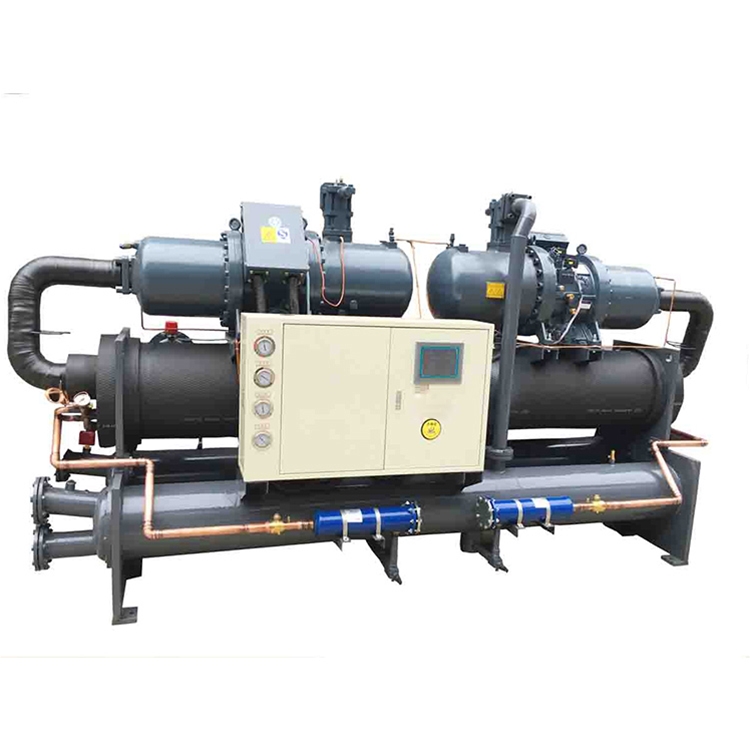
A refrigeration unit is mainly composed of four components: a refrigeration compressor, a condenser, a cold air fan, and an electromagnetic valve, along with an oil separator, a storage tank, an oil sight glass, a diaphragm type hand valve, and a return air filter.
Equipment characteristics
1. By using multiple compressor units in parallel, the excess cooling capacity of the system can be reasonably selected to achieve the optimal configuration.
2. Multiple compressors are connected in parallel for centralized cooling. When one of the compressors fails, it does not affect the operation of the entire system, and the temperature of the cold storage will not fluctuate. The faulty compressor can be dismantled and repaired separately.
3. When only part of the cold storage is opened, in automatic operation mode, the system can concentrate all the cooling capacity on the opened cold storage, greatly reducing the pre cooling time, ensuring the freshness of fruits, and extending the preservation time.
4. When only part of the cold storage is opened, the system can automatically control the start and stop of the compressor according to the load situation in automatic operation mode, in order to save energy. (Some compressors can also be manually shut down to stop working).
5. The system automatically accumulates the running time of the compressor and operates alternately to prevent excessive wear and prolong the service life of the compressor.
6. When some compressors in the unit are working, the condenser has a large amount of surplus surface area, which can enhance heat exchange efficiency, reduce condensation pressure, and improve the working efficiency of the unit.
7. The microcomputer control system makes centralized control possible, enabling remote fault telephone alarm and unmanned duty.


XXXX provides one-stop solution for professional windows doors manufacturer and installation. We have been serving customers with our high quality and branded products in United States, Asia and worldwide.
Quick Link
Contace us
Service telephone:400-669-1668
Telephone:0536-6184887
Fax:0536-6356235
Mailbox:mail@zhongtaijixie.com
Address:Chengyang Industrial Park, Qingdao, Shandong Province